Alina Rentsch lives and works in Berlin. Her work engages with spatial expectation and the ways it is structured. Rather than treating space as a neutral setting, she works with its underlying scripts – display, orientation, and movement, including their social and economic codings. Drawing on logics of advertising and signage, her work operates between articulation and suggestion, where perception is guided without becoming fully explicit. She holds a BFA from Weißensee Academy of Art, Berlin, and an MFA from Konstfack, Stockholm; she is represented by Petrine, Paris –––
Booth
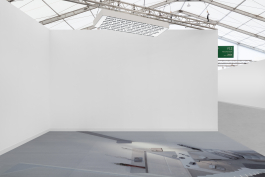
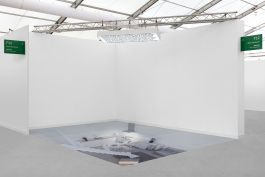
PF400 Velour, 580 x 430 cm
LED panel, vinyl film, 200 x 60 x 15 cm
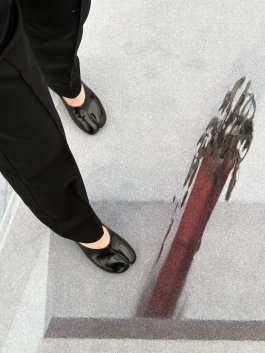
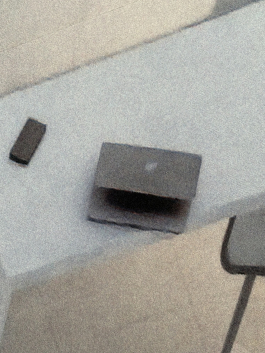
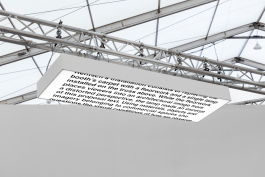
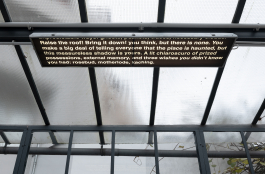
Booth transforms the corner space at Frieze London into a site of distortion and shifting perspectives. A printed carpet creates an anamorphic illusion of an imagined sub-level that resolves only from one precise point of view. Above, a single lamp voices an excerpt from her fair proposal, turning the booth into both a commercial metric and an image-producing device. Drawing on seventeenth-century perspective boxes, economic thresholds, and the shifting position of the viewer, Booth moves between image and infrastructure, illusion and document.
The presentation is accompanied by A Private Life, a text by Angharad Williams, adapted for the fair from her 2021 piece The Last Testament and Will of Me.Â


Fear not, dear shopper, for there's a way
invited by Franca Zitta
Installation, various materials
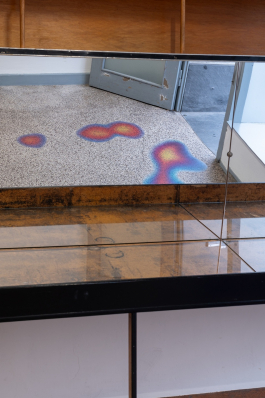
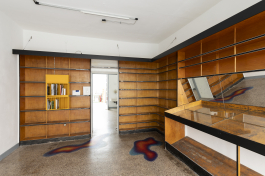
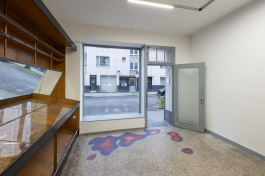
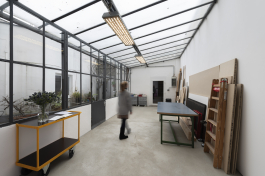
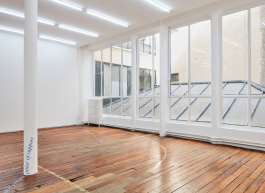
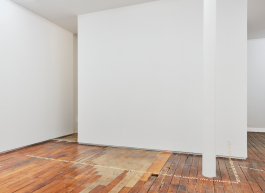
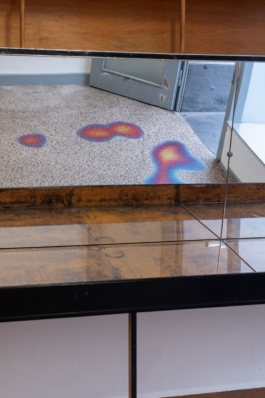
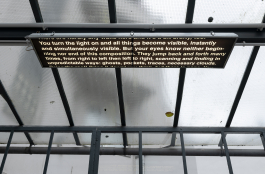
Fear not, dear shopper, for there’s a way takes its starting point from the location itself: the exhibition space Linienstrasse in Düsseldorf, with its historical context and spatial structure. The exhibition unfolds across three successive rooms, evoking a dramaturgy akin to a three-act play. Once a grocery store, the space reimagines visitors as shoppers, moving through a staged experience. In the first act, visitors encounter heat maps – tools typically used to evaluate customer behavior in commercial environments. The second act offers an escalation, namely a distorted reflection of the viewer. In the final act, a teleprompter-like voice describes both the immediate situation and the imagined desires of a disappointed shopper who ultimately arrives at an absence – a stage where expectation lingers but resolution never fully materializes.Â


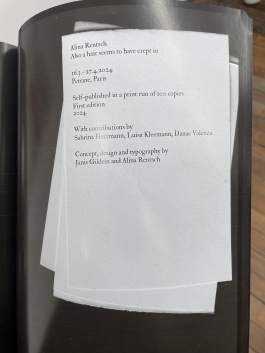
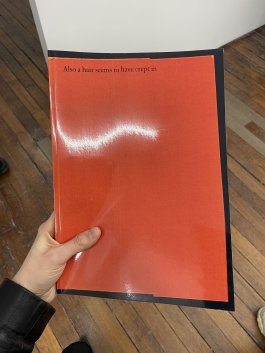
Also a hair seems to have crept inÂ
Installation, various materials
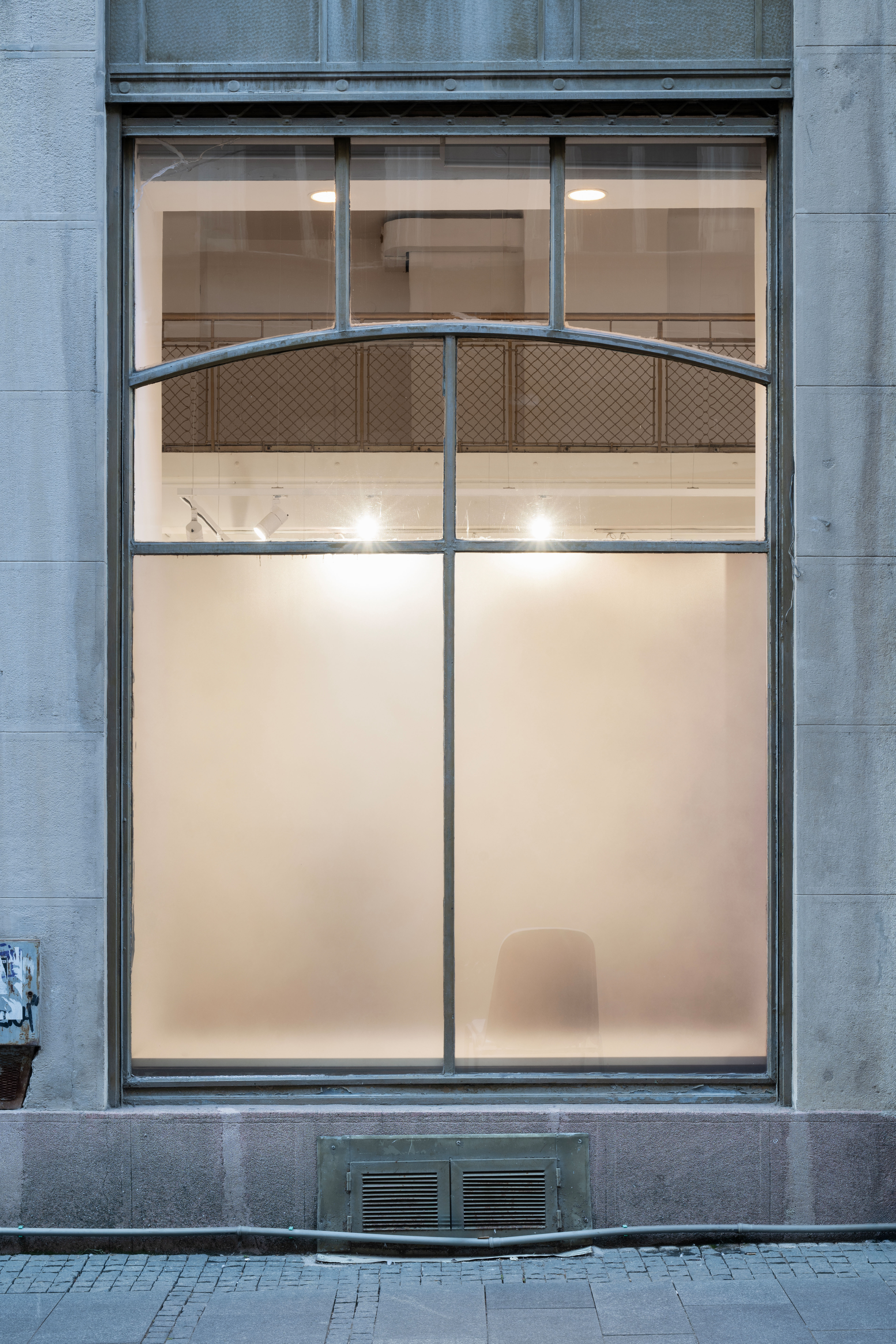
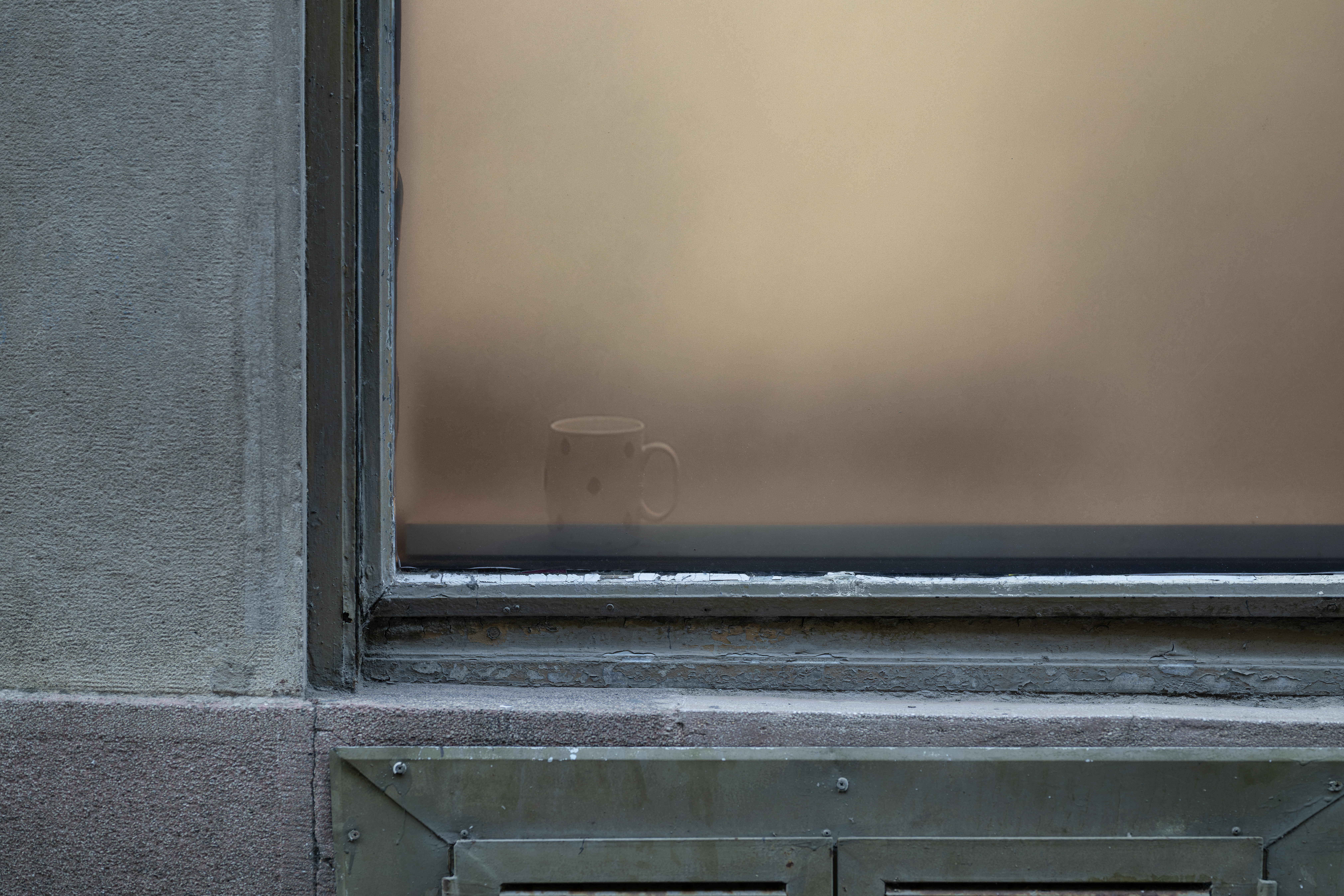
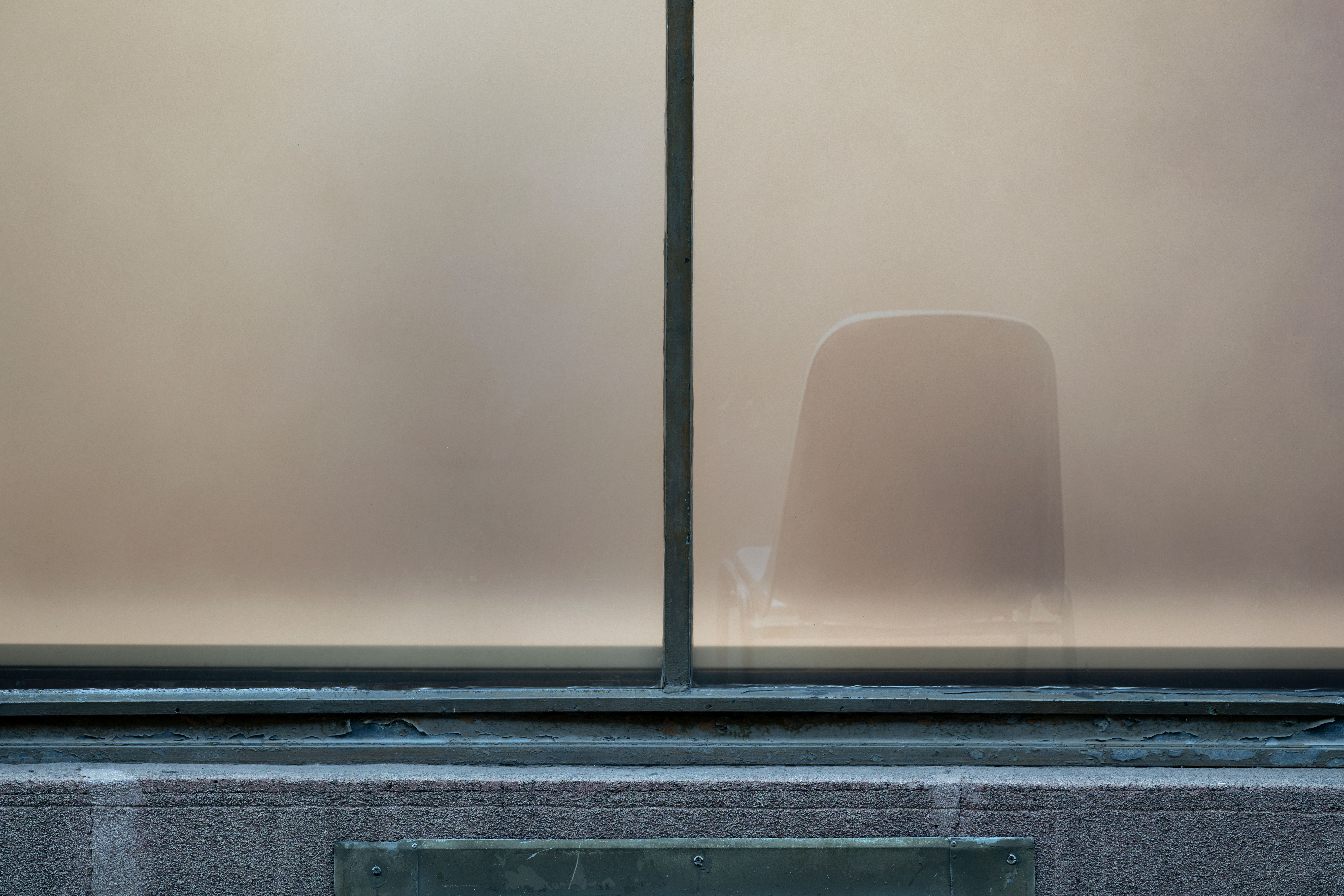
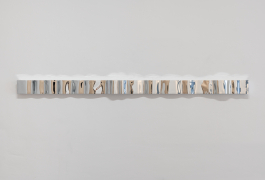
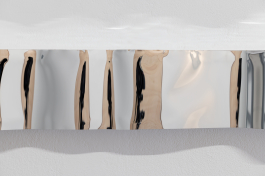
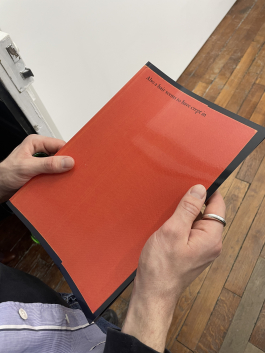
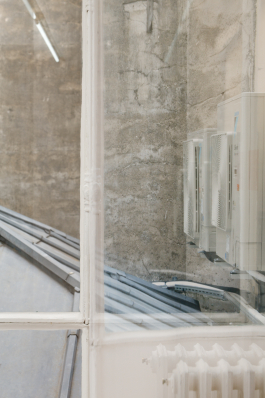
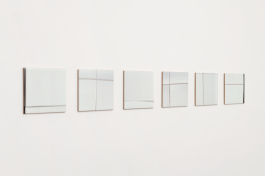
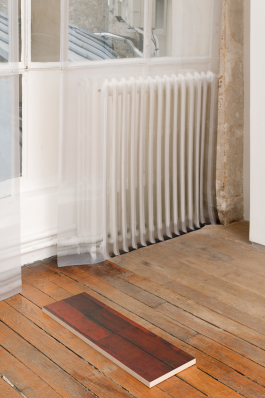
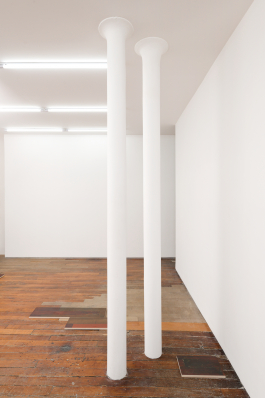
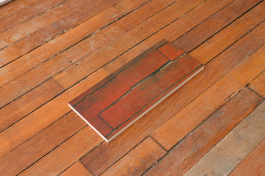
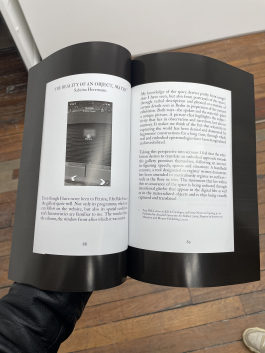
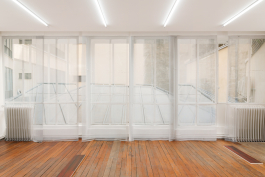
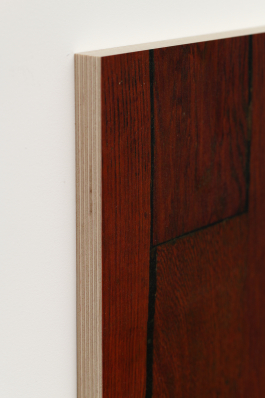
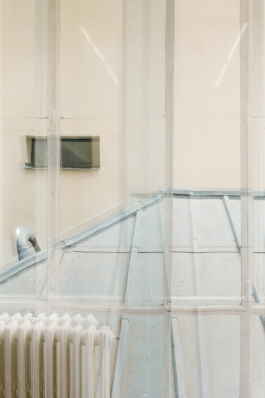
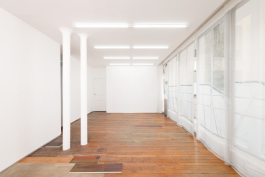
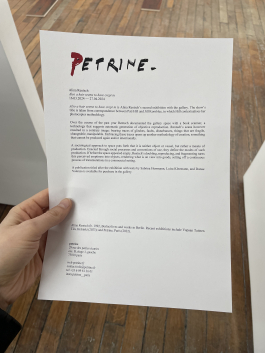
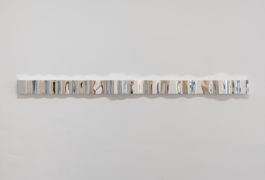
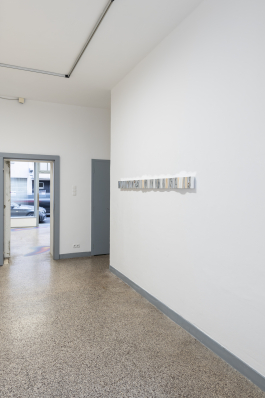
The exhibition comprises new works that take the gallery space itself as subject, exploring the relationship between the objects and their physical environment. Over the course of the past year the gallery space was documented with a book scanner, a technology that suggests automatic generation of objective reproduction. The scans however resulted in a contrary image: bearing traces of glitches, faults, disturbances, things that are fragile, changeable, manipulable. Embracing these traces opens up another methodology of creation, something that cannot be produced again and/or intentionally. A sociological approach to space puts forth that it is neither object or vessel, but rather a means of production. Enacted through social processes and conventions of use, they define the modes of such production. If before the space appeared empty, the doubling, reproducing, and fragmenting turns this perceived emptiness into objects, rendering what is on view into goods, setting off a continuous process of transmutations in a commercial setting.


Great Weather
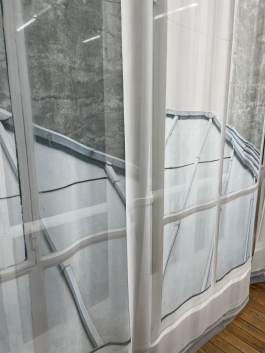
Sublimation print on textile (420 cm x 140 cm)
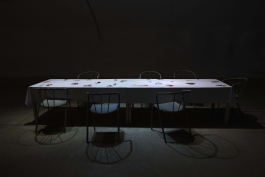
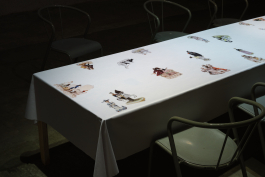
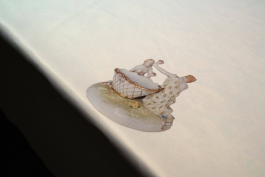
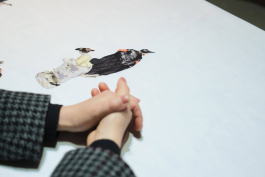
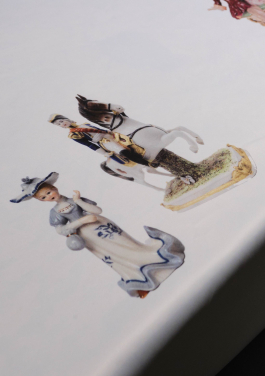
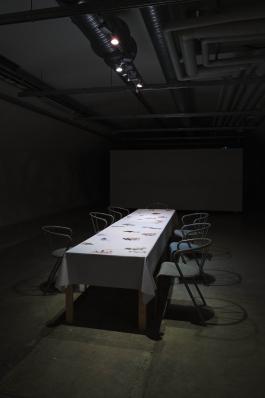
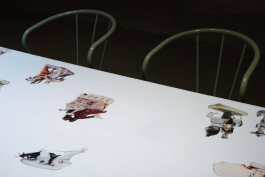
Since the Renaissance, ceramic figurines have been used as decoration for ceremonial tables, intended to suggest topics of conversation for guests. These conversation pieces often depicted taboo or provocative scenes and were designed to spark discussion, while also allowing guests to gauge one another’s knowledge, taste, or cultural standing. Great Weather gathers these objects on a table, on which the objects themselves enter into dialogue with each other. Grouped and removed from their customary context, the work questions their legibility today and proposes an alternative way of looking at these pieces, creating an environment conducive to exchange and conviviality within a space that was not originally aligned with such qualities.


Talking in circles
Glossy vinyl foil installed on floor, dimensions variable
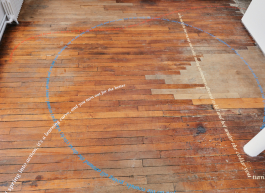
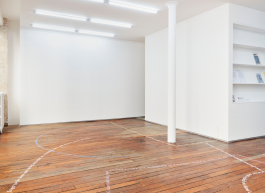
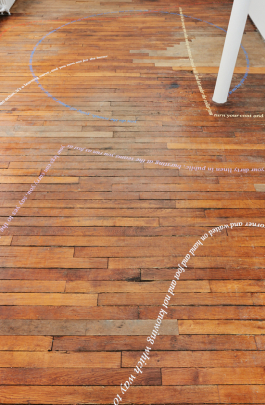
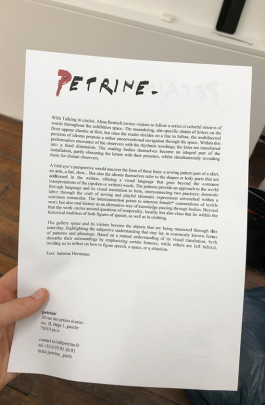
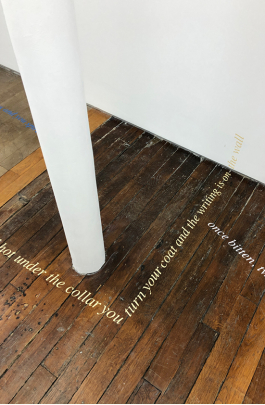
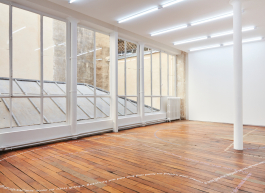
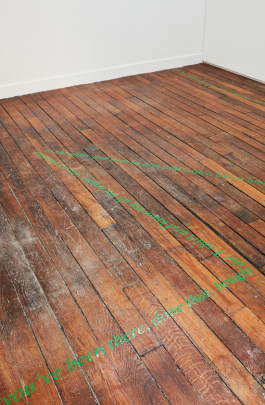
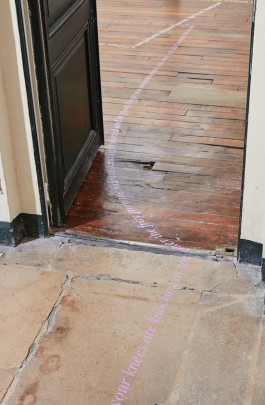
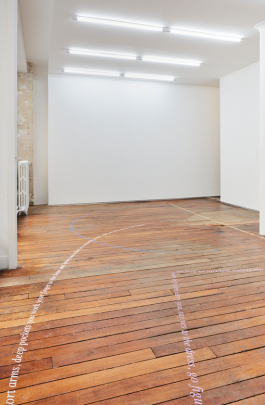
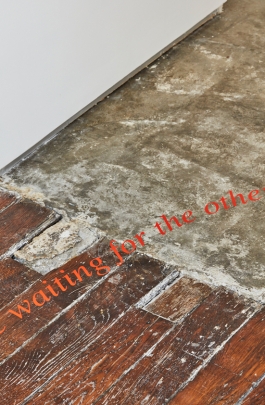
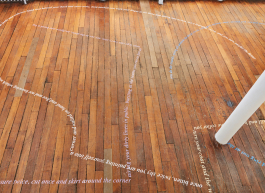
Talking in circles invites visitors to follow a series of colorful streams of words throughout the exhibition space. The meandering, site-specific chains of letters on the floor consist of idiomatic expressions that appear chaotic at first, but once the reader decides on a line to follow, the multifaceted patterns reveal not only an unconventional navigation through the space, but also the underlying structures, absurdities, and patterns within these language images. In this performative encounter of the observers with the rhythmic wordings, the latter are transferred into a third dimension. The reading bodies themselves become an integral part of the installation, partly obscuring the letters with their presence, whilst simultaneously revealing them for distant observers.
Scroll to top
© 2026 All Rights Reserved.


Alina Rentsch lives and works in Berlin. Her work engages with spatial expectation and the ways it is structured. Rather than treating space as a neutral setting, she works with its underlying scripts – display, orientation, and movement, including their social and economic codings. Drawing on logics of advertising and signage, her work operates between articulation and suggestion, where perception is guided without becoming fully explicit. She holds a BFA from Weißensee Academy of Art, Berlin, and an MFA from Konstfack, Stockholm; she is represented by Petrine, Paris –––
Booth
PF400 Velour, 580 x 430 cm
LED panel, vinyl film, 200 x 60 x 15 cm
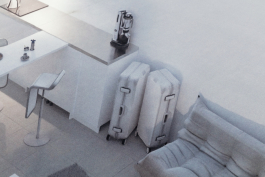
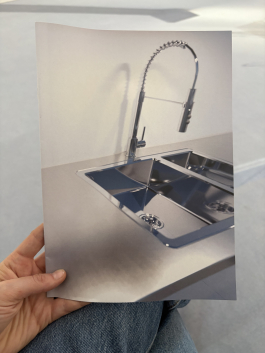
Booth transforms the corner space at Frieze London into a site of distortion and shifting perspectives. A printed carpet creates an anamorphic illusion of an imagined sub-level that resolves only from one precise point of view. Above, a single lamp voices an excerpt from her fair proposal, turning the booth into both a commercial metric and an image-producing device. Drawing on perspective devices, economic thresholds, and the shifting position of the viewer, the work moves between image and infrastructure, illusion and document. Language-like markers point to trade, logistics, and functionality while invoking fiction and grammar. The kitchen appears as a displaced structure of translation, where raw material is processed into consumable form. Inserted into the fair’s commercial logic, this domestic infrastructure unsettles the line between private and public, utility and display, revealing the booth as a stage where language, economy, and perception are continuously translated into image.
The presentation is accompanied by A Private Life, a text by Angharad Williams, adapted from The Last Testament and Will of Me (2021).


Fear not, dear shopper, for there's a way
curated by Franca Zitta
Installation, various materials
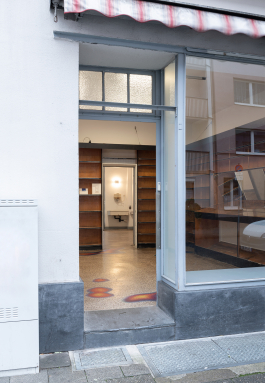
Fear not, dear shopper, for there’s a way takes its starting point from the location itself: the exhibition space Linienstrasse in Düsseldorf, with its historical context and spatial structure. The exhibition unfolds across three successive rooms, evoking a dramaturgy akin to a three-act play. Once a grocery store, the space reimagines visitors as shoppers, moving through a staged experience. In the first act, visitors encounter heat maps – tools typically used to evaluate customer behavior in commercial environments. The second act offers an escalation, namely a distorted reflection of the viewer. In the final act, a teleprompter-like voice describes both the immediate situation and the imagined desires of a disappointed shopper who ultimately arrives at an absence – a stage where expectation lingers but resolution never fully materializes.Â


Also a hair seems to have crept inÂ
Installation, various materials
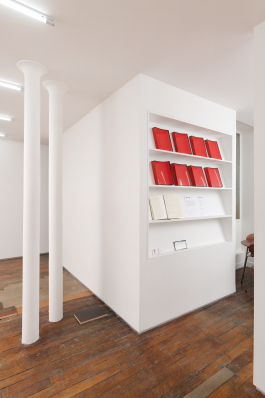
The exhibition comprises new works that take the gallery space itself as subject, exploring the relationship between the objects and their physical environment. Over the course of the past year the gallery space was documented with a book scanner, a technology that suggests automatic generation of objective reproduction. The scans however resulted in a contrary image: bearing traces of glitches, faults, disturbances, things that are fragile, changeable, manipulable. Embracing these traces opens up another methodology of creation, something that cannot be produced again and/or intentionally. A sociological approach to space puts forth that it is neither object or vessel, but rather a means of production. Enacted through social processes and conventions of use, they define the modes of such production. If before the space appeared empty, the doubling, reproducing, and fragmenting turns this perceived emptiness into objects, rendering what is on view into goods, setting off a continuous process of transmutations in a commercial setting.


Great Weather
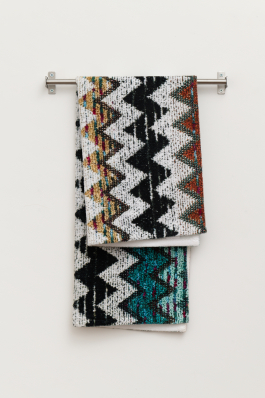
Sublimation print on textile (420 cm x 140 cm)
Since the Renaissance, ceramic figurines have been used as decoration for ceremonial tables, intended to suggest topics of conversation for guests. These conversation pieces often depicted taboo or provocative scenes and were designed to spark discussion, while also allowing guests to gauge one another’s knowledge, taste, or cultural standing. Great Weather gathers these objects on a table, on which the objects themselves enter into dialogue with each other. Grouped and removed from their customary context, the work questions their legibility today and proposes an alternative way of looking at these pieces, creating an environment conducive to exchange and conviviality within a space that was not originally aligned with such qualities.


Talking in circles
Glossy vinyl foil installed on floor, dimensions variable
Talking in circles invites visitors to follow a series of colorful streams of words throughout the exhibition space. The meandering, site-specific chains of letters on the floor consist of idiomatic expressions that appear chaotic at first, but once the reader decides on a line to follow, the multifaceted patterns reveal not only an unconventional navigation through the space, but also the underlying structures, absurdities, and patterns within these language images. In this performative encounter of the observers with the rhythmic wordings, the latter are transferred into a third dimension. The reading bodies themselves become an integral part of the installation, partly obscuring the letters with their presence, whilst simultaneously revealing them for distant observers.
Scroll to top
© 2026 All Rights Reserved.